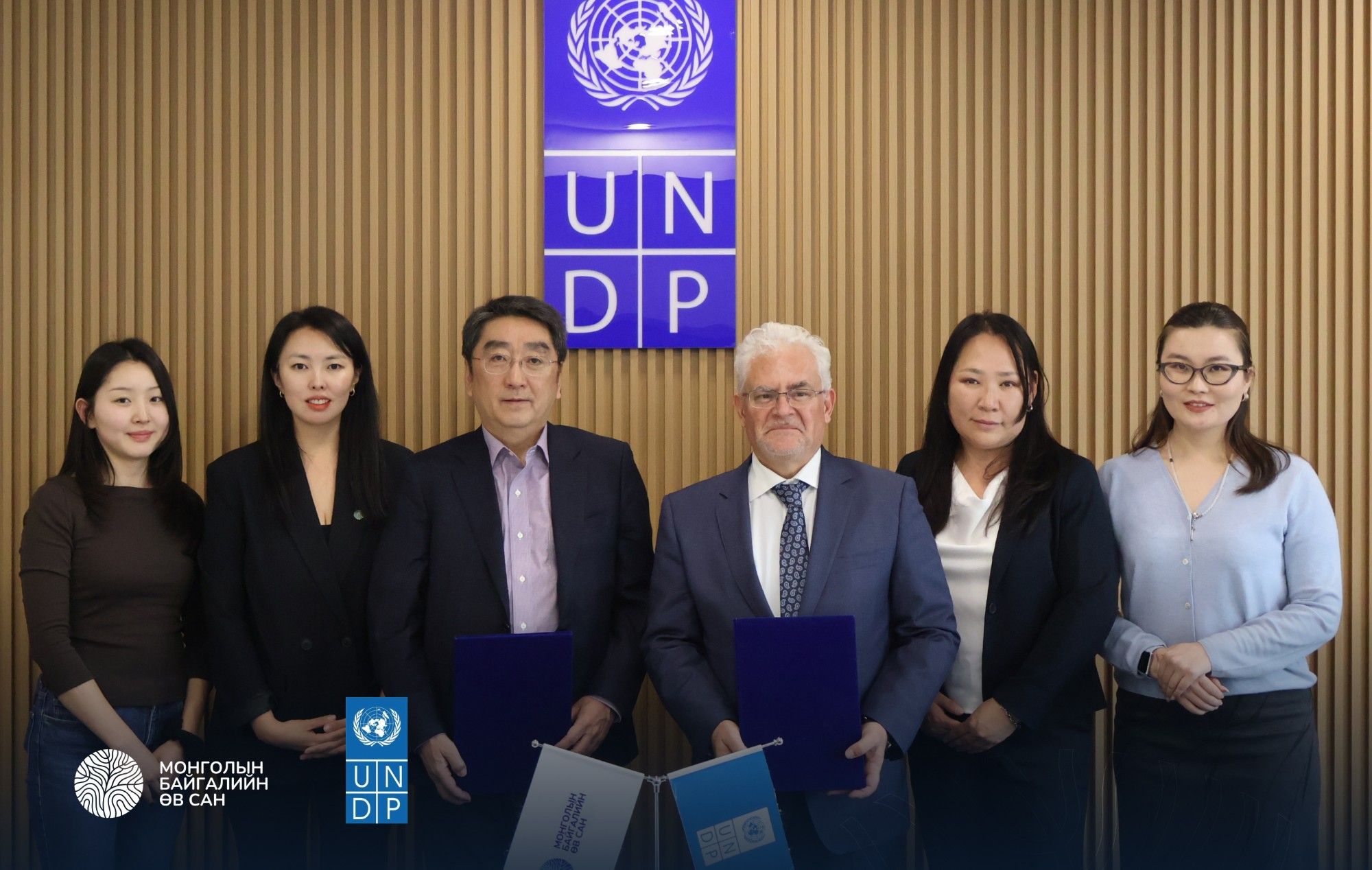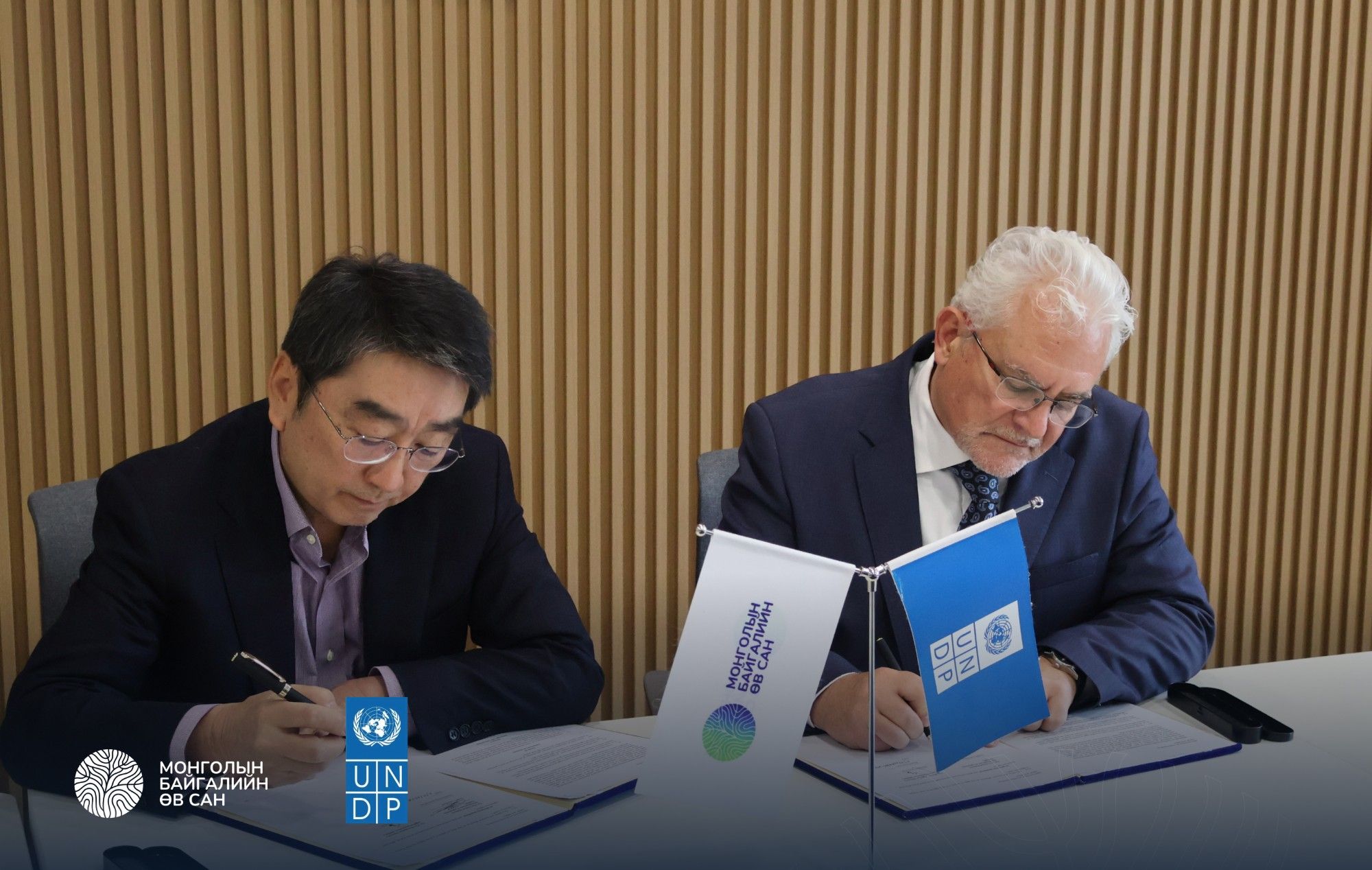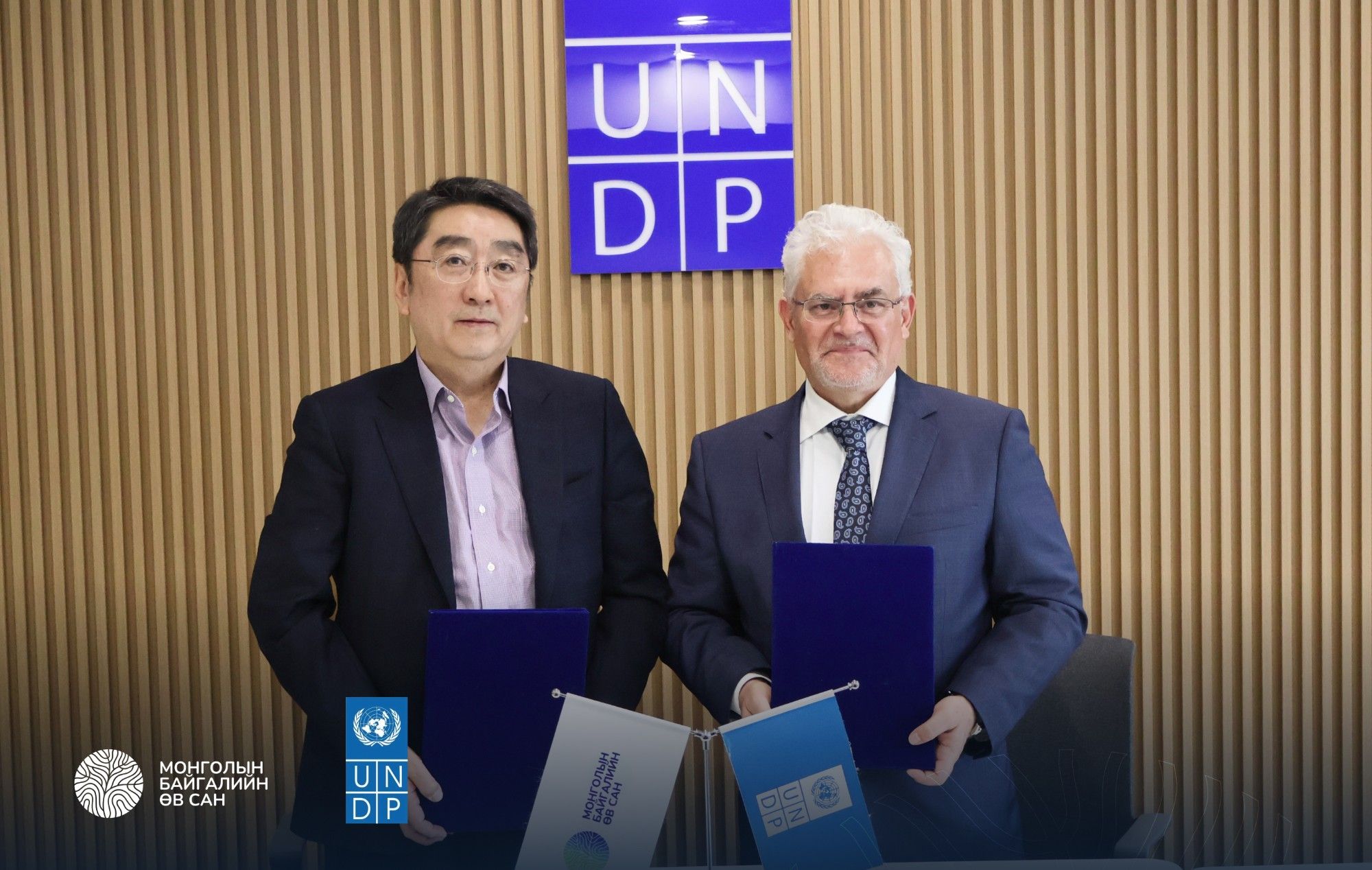
The United Nations Development Programme (UNDP) and the Mongolian Nature’s Legacy Foundation (MNLF) signed a Memorandum of Understanding on cooperation for sustainable development and nature conservation.
The memorandum was officially signed by Lionel Laurens, UNDP Resident Representative in Mongolia, and M. Boldoo, Board Chair of MNLF, on behalf of their respective organizations.
Under this Memorandum of Understanding, the parties will collaborate to advance shared sustainable development priorities in Mongolia, with a specific focus on nature conservation, climate resilience, inclusive livelihoods, and mobilizing the necessary finance to achieve these goals.
Furthermore, the partnership will jointly explore and design innovative financing instruments, such as biodiversity funds and debt-for-nature arrangements, while supporting nature-based solutions to strengthen climate-resilient livelihoods for herder communities and local enterprises.
Areas of cooperation
Financing for sustainable development
- Support the development of public policy, regulatory and institutional frameworks that align public and private finance with national development priorities and the Sustainable Development Goals, including biodiversity and nature finance, drawing on UNDP’s global expertise and initiatives;
- Advance the integration of environmental, social, and nature-related risk management and nature-positive financing across Mongolia’s financial and private sectors, with the aim of increasing private sector investment and participation in green, inclusive and nature-positive development;
- Jointly explore, design, and pilot innovative and blended financing instruments, such as biodiversity funds and debt-for-nature arrangements, in support of conservation, climate action and sustainable livelihoods;
Climate resilience and sustainable management of natural ecosystems
- Support nature-based solutions, ecosystem restoration, and the sustainable and inclusive management of rangelands, forests, water resources, and protected and conserved areas;
- Support the design and implementation of monitoring, reporting, and verification (MRV) and traceability systems, including for rangeland and ecosystem carbon, that generate credible data to inform decision-making and enable access to results-based finance and environmental markets;
- Support herder communities, cooperatives, local organizations and small enterprises in strengthening climate-resilient livelihoods, sustainable value chains and green business practices, with particular attention to women and youth;
Knowledge, capacity, and advocacy
- Organize peer-learning exchanges, knowledge-sharing sessions, webinars, workshops, and other capacity-building initiatives to enhance technical expertise and foster collaboration among stakeholders;
- Collaborate on awareness-raising campaigns and outreach programs to promote understanding of nature conservation, climate resilience and sustainable finance among policymakers, financial institutions, businesses, and the public;
Partnerships, resource mobilization and institutional development
- Collaborate on joint resource mobilization and co-develop programmes and projects aligned with shared priorities and national development plans;
- Facilitate multi-stakeholder partnerships among government, the private sector, civil society, academia, communities and development partners, including through South-South and triangular cooperation.
Photo gallery
1 / 4